

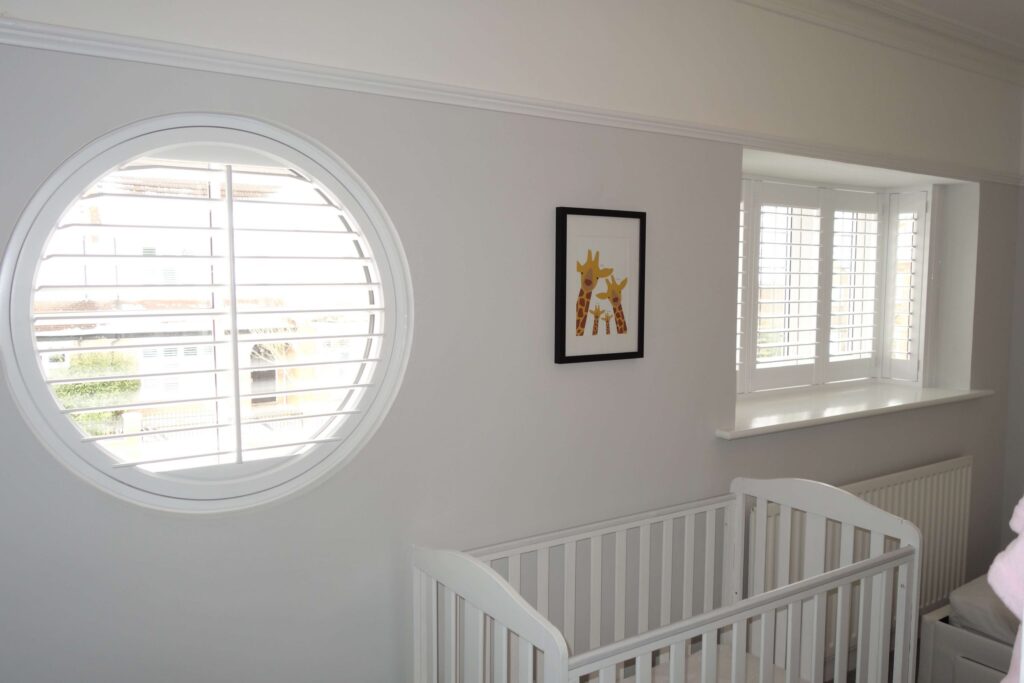
Window shutters have become one of the most popular window dressing choices in the UK and beyond, prized for their clean lines, durability, and the level of light and privacy control they offer. But if you’re considering them for your home, you might be wondering: can shutters actually go on any window, or are there shapes, sizes, and situations where they simply won’t work?
The short answer is that shutters are far more adaptable than most people realise. With today’s manufacturing techniques, almost any window can be fitted with shutters — but “almost” is doing some work in that sentence, and there are a handful of situations worth understanding before you commit.
Standard Windows: No Problem at All
For the vast majority of homes, fitting shutters is straightforward. Regular rectangular windows — whether they’re bay, sash, or sliding — are the easiest and most common type to shutter. Made-to-measure shutters are cut to the precise dimensions of your window recess or face-fitted to the surrounding wall, so even slightly irregular or non-standard-sized windows can usually be accommodated without much fuss.
Shaped and Unusual Windows
This is where shutters really prove their versatility compared to curtains or blinds. Specialist shutter companies routinely produce solutions for:
- Arched and Georgian windows – shaped shutter panels can be crafted to follow the curve of the arch, either as a fixed decorative top with functioning panels below, or as fully operable arched shutters.
- Bay and bow windows – these are actually one of the classic use cases for shutters, since each individual pane can be fitted with its own frame, allowing you to angle and adjust light independently across the bay.
- Triangular and apex windows – often found in loft conversions or gable ends, these can be fitted with custom-shaped fixed or hinged panels.
- Circular or porthole windows – less common, but bespoke manufacturers can produce circular frames to match.
- French doors and bi-fold doors – hinged or sliding shutter panels can be designed to move with the door itself.
Where It Gets More Complicated
While most shapes can technically be shuttered, a few situations call for extra thought:
Very small or narrow windows. Tiny windows, such as those in downstairs cloakrooms, can sometimes be too small for a practical hinged shutter mechanism. In these cases, a simplified fixed louvre panel is often used instead.
Very large windows or floor-to-ceiling glazing. Oversized panes may need to be split into multiple shutter panels or paired with a track system to keep each panel a manageable size and weight.
Windows with unusual opening mechanisms. Some tilt-and-turn or awning windows have handles or hinges that protrude into the room, which can interfere with how close-fitting shutters sit. A good installer will assess clearance before fitting.
Listed buildings and conservation areas. This is a planning issue rather than a technical one. If your home is a listed building or sits within a conservation area, you may need permission before altering the exterior appearance of windows, particularly for solid or plantation-style shutters visible from the street. It’s always worth checking with your local planning authority first.
Material and Style Considerations
The material you choose can also affect suitability. Solid wood shutters offer a premium look but can be heavier, making them less ideal for very large panels. Composite or engineered wood options are more moisture-resistant, making them a better fit for bathrooms and kitchens where humidity is higher. Vinyl or PVC shutters are often the most practical choice for high-moisture rooms, as they won’t warp or swell the way timber can.
Getting the Right Fit
Because so much depends on the specific dimensions, shape, and opening mechanism of your window, the best approach is almost always to have a specialist measure and assess your windows in person. Most reputable shutter companies offer a free home consultation, during which they can flag any potential complications — such as deep reveals, uneven walls, or restricted opening mechanisms — before you commit to an order.
The Bottom Line
In practice, there are very few windows that genuinely can’t be fitted with shutters in some form. Whether your windows are arched, bay, oversized, or oddly shaped, a good manufacturer can usually design a bespoke solution. The main things to check beforehand are practical clearance around opening mechanisms and, if relevant, any planning restrictions tied to a listed building or conservation area. Beyond that, shutters are one of the most flexible window treatments available.