

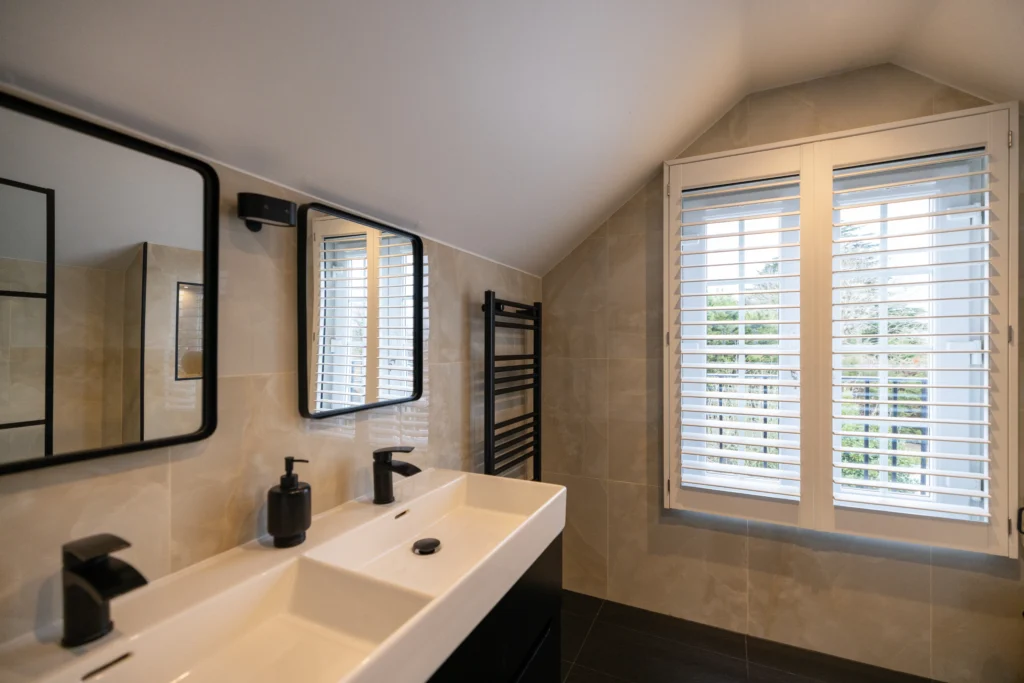
Interior shutters are not just window coverings; they are part of the room.
They frame the light and change how the space feels.
They can even add value to your home.
But choosing the right style is only half the job. The material you select will affect how the shutters look, how long they last, and how they perform over time.
If you are thinking about installing interior shutters, here is how to choose the best material for your home.
1. Start With the Room Itself
Before looking at samples, think about where the shutters will go.
Is it a:
- Bathroom with high humidity?
- Kitchen with heat and steam?
- Living room with large front-facing windows?
- Bedroom that needs blackout and insulation?
Different rooms have different demands. The best material in one space might not be the best in another.
2. Solid Wood Shutters
Solid wood is often considered the premium choice.
Why choose wood:
- Natural, authentic appearance
- Rich grain and painted finishes
- Strong and durable
- Ideal for larger windows
Wood shutters feel warm and substantial. They suit period properties and modern homes alike. They also allow for custom colours and stains.
However, wood can be sensitive to moisture. In bathrooms or kitchens with high humidity, untreated wood may warp over time.
If you want a timeless, high-end look in living areas or bedrooms, solid wood is difficult to beat.
3. MDF Shutters
MDF, or medium-density fibreboard, is a popular alternative.
Advantages of MDF:
- More affordable than solid wood
- Smooth painted finish
- Resistant to minor warping
- Consistent appearance
MDF shutters are usually coated with a durable outer layer. They work well in most dry interior spaces.
They are heavier than wood and not ideal for very large window spans. But for standard-sized windows, they offer good value and a clean finish.
4. PVC or Waterproof Shutters
For rooms with moisture, PVC shutters are often the safest option.
Best suited for:
- Bathrooms
- Wet rooms
- Kitchens
- Utility rooms
PVC shutters are fully waterproof. They will not warp, crack, or peel when exposed to steam or splashes.
Modern versions are designed to look like painted wood, so you do not lose the aesthetic appeal.
If durability in damp conditions is your priority, waterproof shutters are a smart investment.
5. Composite Shutters
Composite shutters combine materials, often using a wood core with a protective outer layer.
Why consider composite:
- Stronger than MDF
- More moisture-resistant than pure wood
- Suitable for medium to large windows
- Good balance between price and performance
Composite options are popular for family homes where durability matters just as much as appearance.
6. Consider Weight and Window Size
Large bay windows or wide openings require materials that can support their own weight over time.
Solid wood and high-quality composite materials are usually better suited for bigger installations. MDF may be less suitable for wide panels due to its weight.
Your installer should measure carefully and recommend a material that will not sag or strain the hinges.
7. Think About Maintenance
Different materials require different levels of care.
- Wood may need occasional repainting or touch-ups.
- MDF is low maintenance but not suitable for soaking or heavy moisture.
- PVC can be wiped clean with minimal effort.
If you want something easy to maintain in a busy household, waterproof or composite shutters may be the simplest choice.
8. Budget Versus Long-Term Value
It is tempting to focus only on price.
But shutters are a long-term feature. Cheaper materials may save money upfront, but could cost more if they warp or need replacing sooner.
Ask yourself:
- How long do I plan to stay in this property?
- Is this a high-traffic or high-moisture room?
- Do I want a premium finish that adds resale appeal?
Sometimes paying slightly more for the right material makes sense.
9. Match the Style of Your Home
Finally, think about the look.
- Solid wood often suits traditional and period properties.
- Smooth painted MDF works well in modern interiors.
- Waterproof shutters are practical but are now available in elegant finishes too.
Choose a material that complements your flooring, furniture and overall design scheme.
Make the Right Choice With Expert Advice
Choosing the best material for interior shutters is not just about appearance. It is about performance, durability and suitability for your space.
The right decision depends on your windows, your rooms and how you live.
If you are unsure which material is best for your home, speak to us, we can assess your space and guide you properly.
Ready to Upgrade Your Windows?
If you are considering interior shutters and want expert advice on the best material for your home, get in touch today.
Book a free consultation and discover how the right shutters can improve your home.